Categories
Uncategorized

IANA IPv4 Address Pool Dips Below 10%

With the distribution of two /8 blocks to APNIC, the Number Resource Organization (NRO) today announced that less than ten percent of available IPv4 addresses remain unallocated.

“This is a key milestone in the growth and development of the global Internet,” noted Axel Pawlik, Chairman of the NRO. “With less than 10 percent of the entire IPv4 address range still available for allocation to RIRs, it is vital that the Internet community take considered and determined action to ensure the global adoption of IPv6. The limited IPv4 addresses will not allow us enough resources to achieve the ambitions we all hold for global Internet access. The deployment of IPv6 is a key infrastructure development that will enable the network to support the billions of people and devices that will connect in the coming years,” added Pawlik.

View the NRO press release in its entirety at:
http://www.nro.net/media/less-than-10-percent-ipv4-addresses-remain-unallocated.html

Roller Network is committed to providing IPv6 enabled services. Hosted mail (POP3, IMAP, webmail), outbound SMTP, and DNS services have been available via IPv6 starting in 2008. We are actively testing transport-level SMTP IPv6 services. In addition, Roller Network colocation, dedicated servers, and hosting are available with dual-stack connectivity. For more information on our IPv6 progress, see: ipv6.rollernet.us

Categories
Uncategorized

New Facility Progress #11

DCP_2616

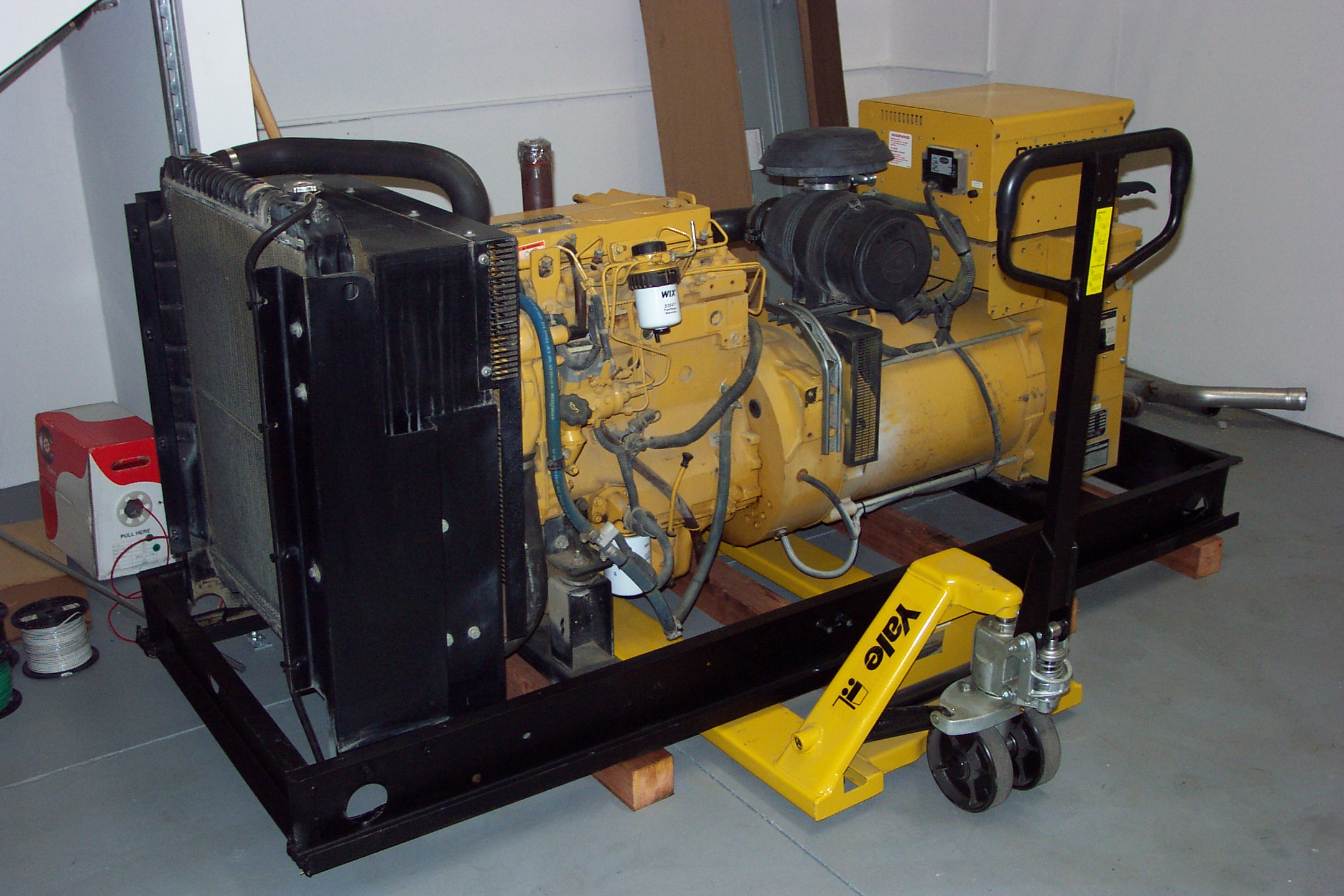
A generator awaiting installation.

DCP_2627

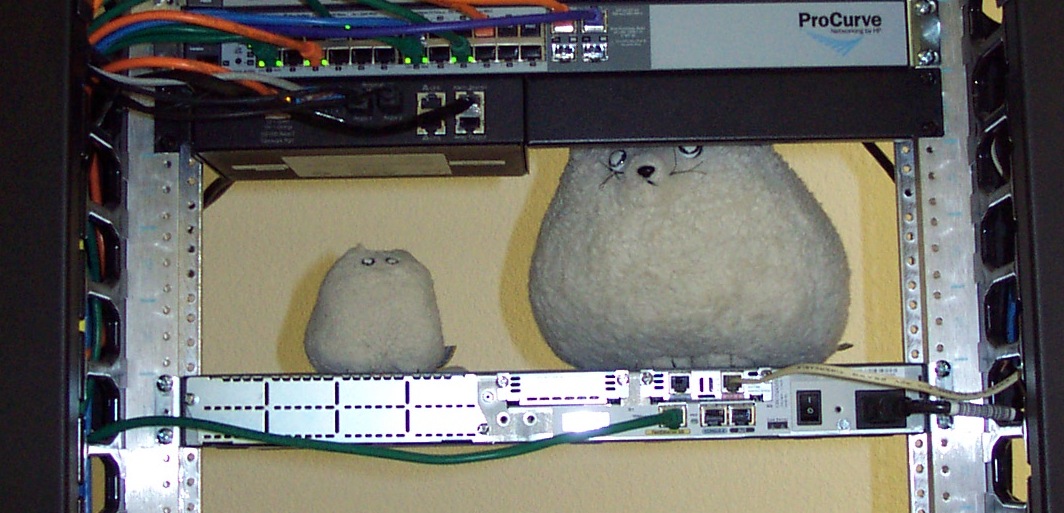
The “rollers”, our unofficial mascots that take residence in the server room on top of a router.

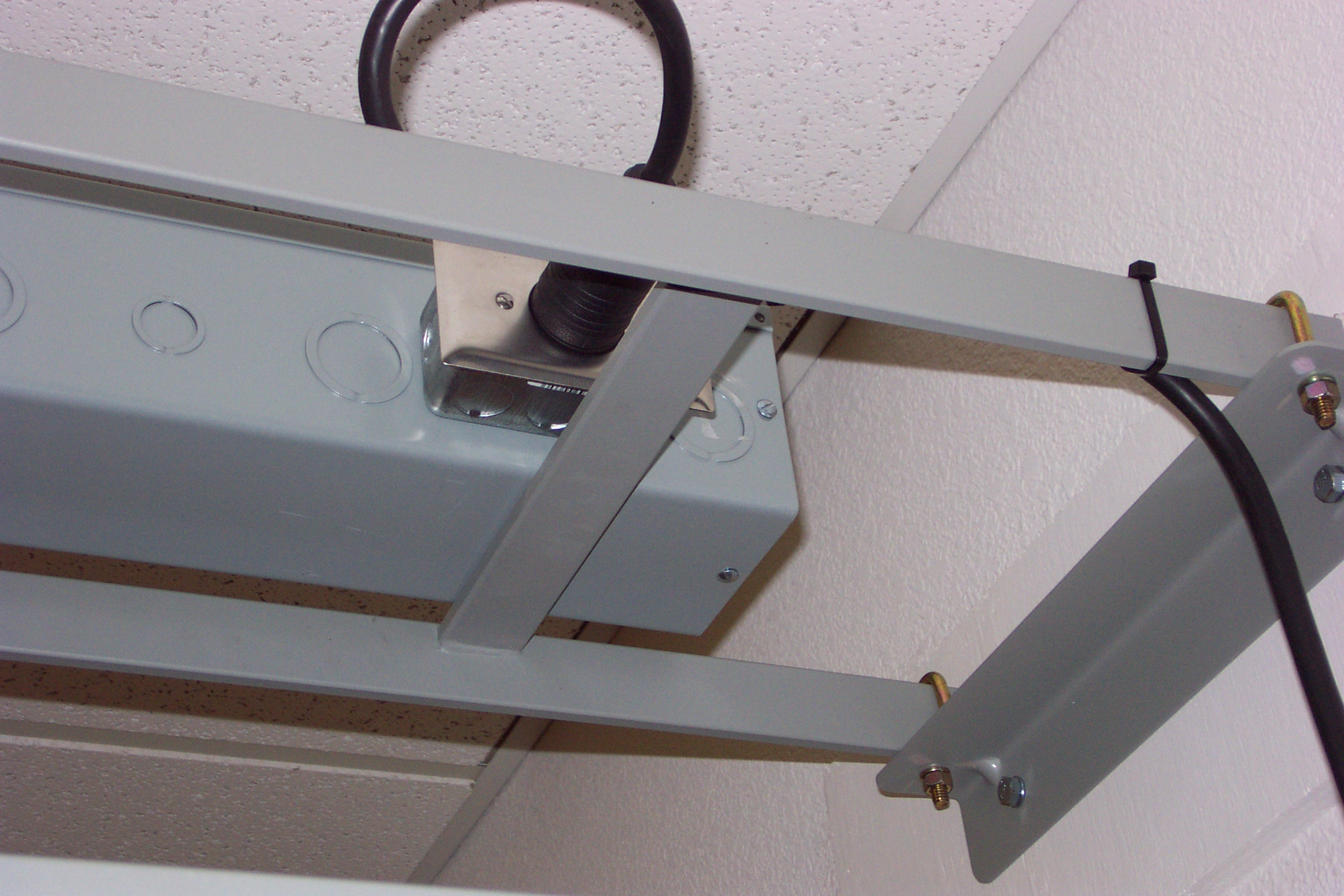
DCP_2638[1] DCP_2637

Detail view of the electrical outlet installation. The smallest circuit we offer is 20A at 208VAC in single phase or three phase, but we can easily provide multiple 20 and 30 amp circuits per rack in single phase or three phase for high density racks. (We do not offer 120VAC circuits.)

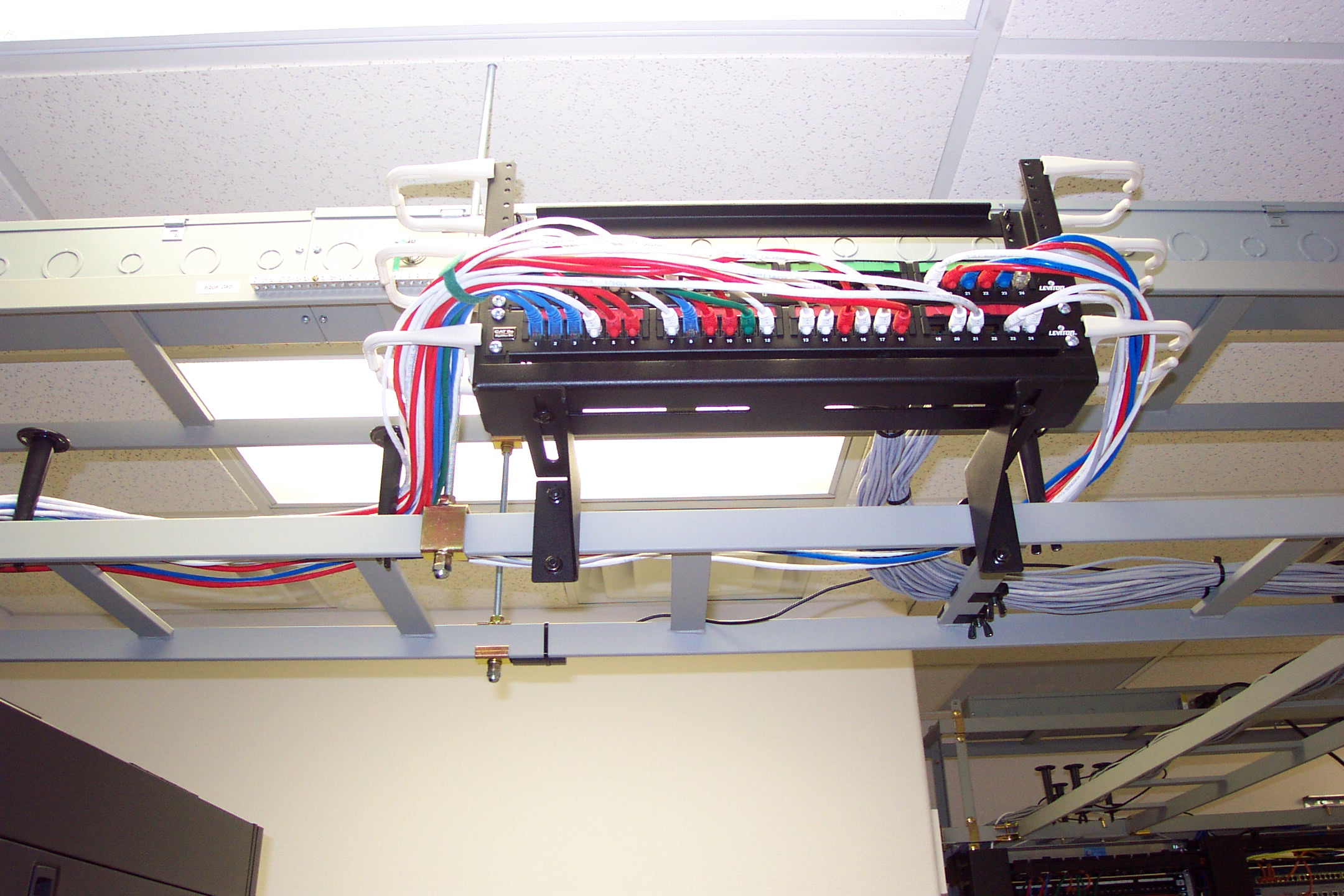
DCP_2631

Detail view of the patchrack. By keeping patch panels out of the racks and using the overhead ladder to route them where they need to be we increase server density and eliminate wasted ports. If high port density per rack is required, top-of-rack switching would be used.

DCP_2640

Detailed view of the overhead area. Even though you can’t see this without a ladder, we like to keep everything in order.

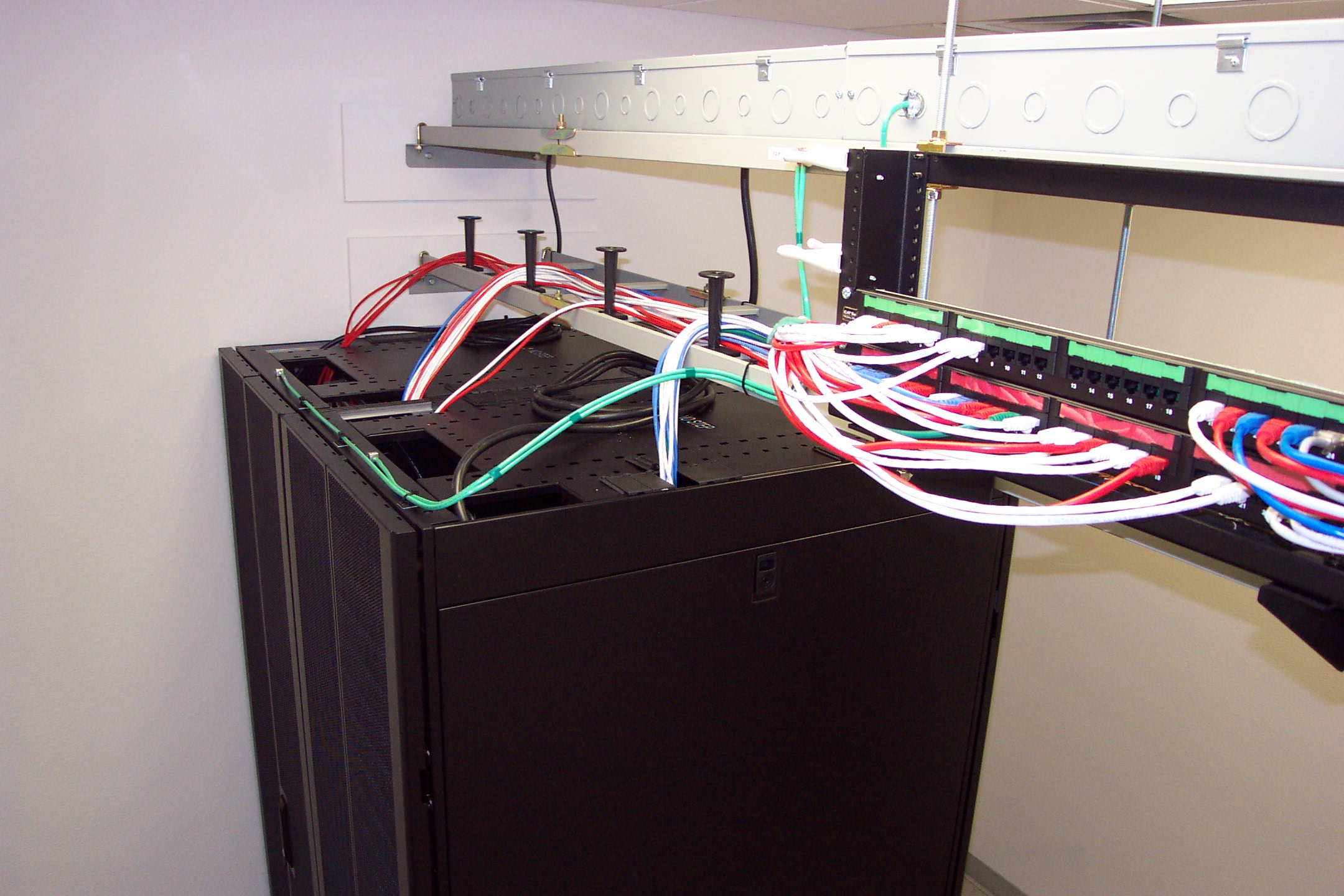
DCP_2632

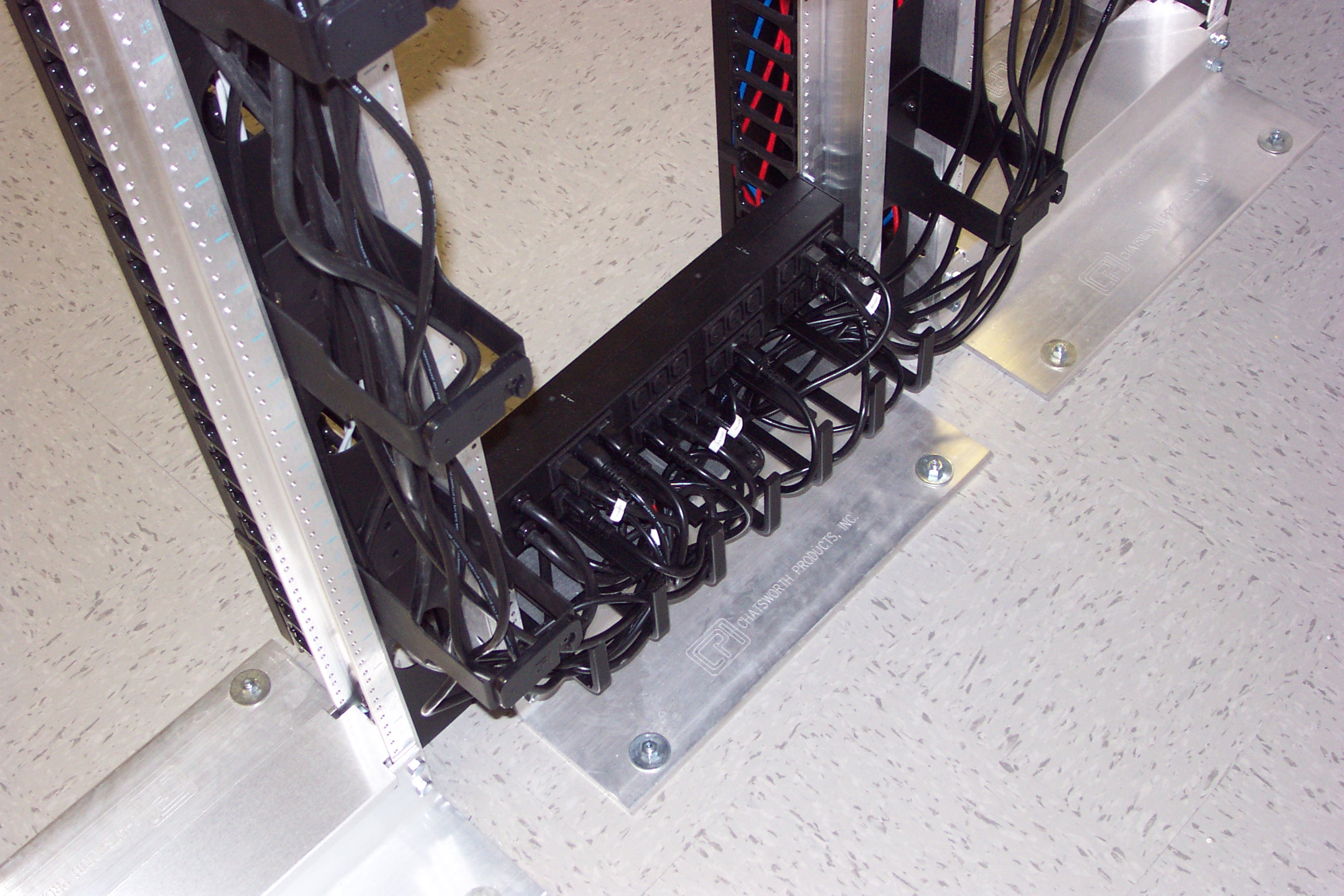
Power cord cable management for the router and switch racks.

DCP_2635

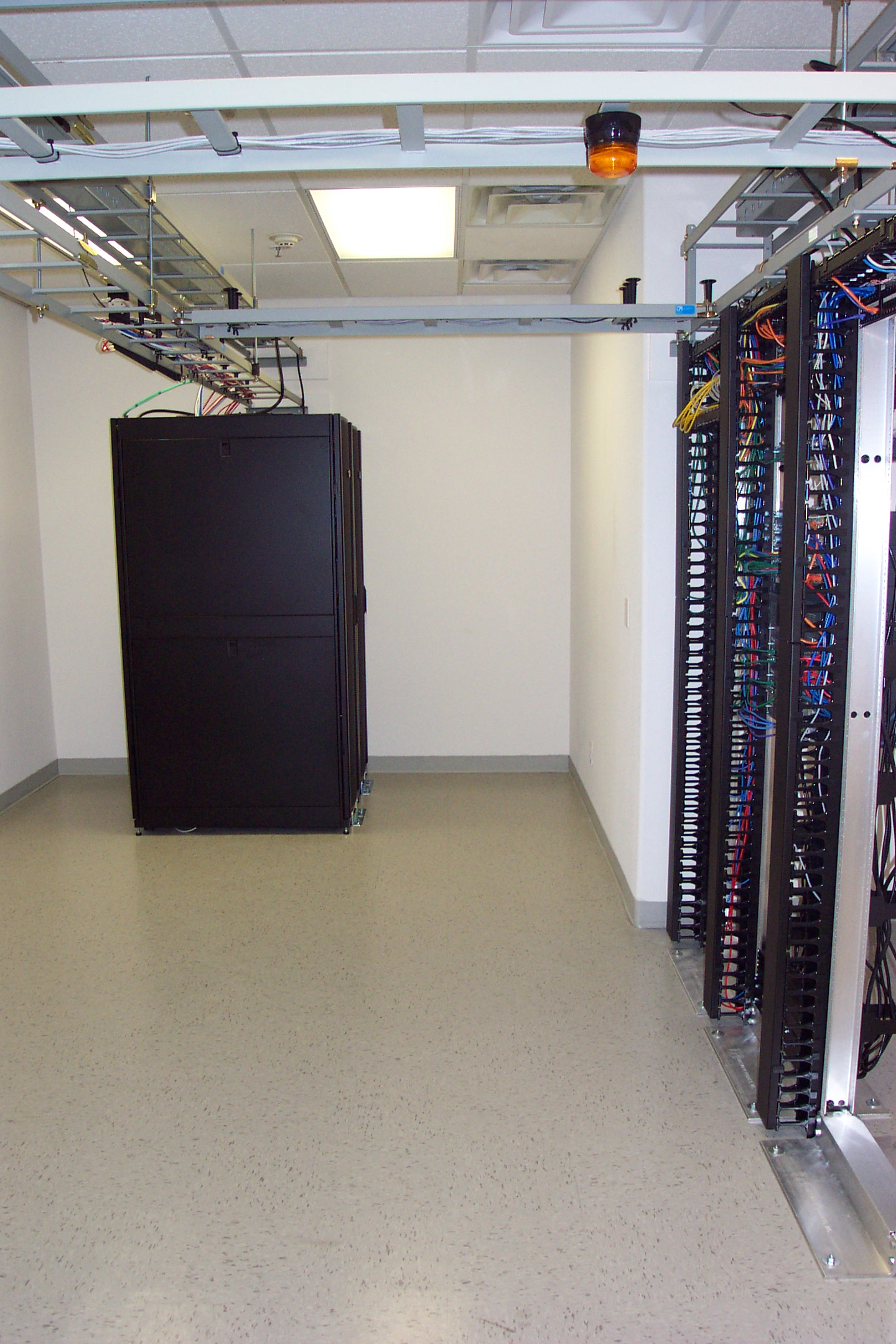
A view of the server room. What was spread out over five racks in the old facility was consolidated into two racks (not counting the two-post racks to the right). The extra space will be offered for colocations and dedicated servers and we will continue installing racks to fill the room. The yellow cables hanging out of the wire management on the right indicate temporary cabling.

Categories
Uncategorized

New Facility Progress #10

We’re on the eve of the move and this is probably the last new facility update before actually moving in. Verizon is still missing in action, but we’re going ahead without them since it’s clear that it isn’t getting resolved anytime soon. We would like to thank Sprint for being patient with us since they were ready to hot cut back in August and we kept delaying to try to resolve things with Verizon.
PA060006-alt

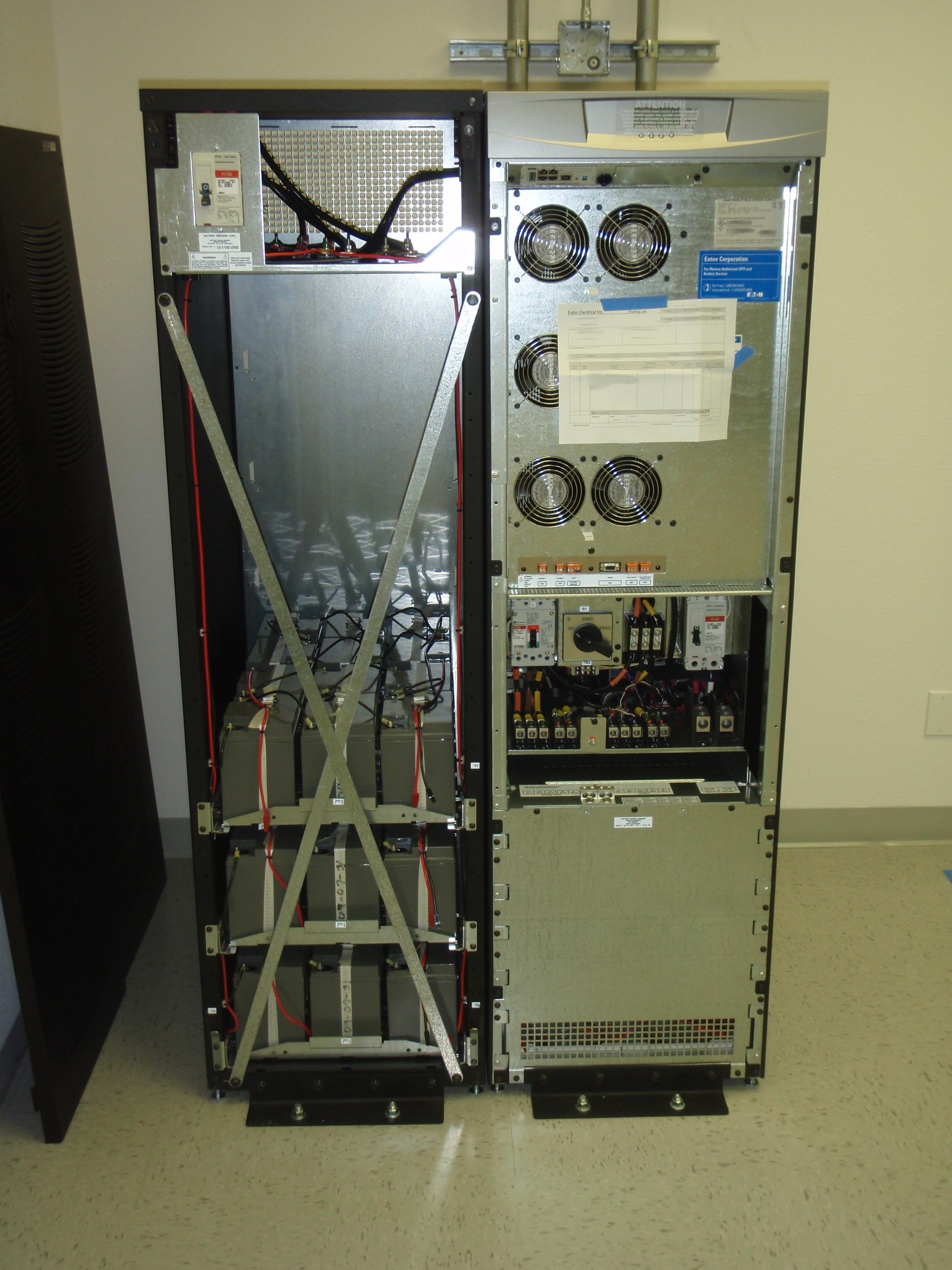
Final layout of a UPS and its battery cabinet before wiring. Three of these complete units will fit into our UPS electrical room (up to 4 supported) to act as one parallel redundant unit.
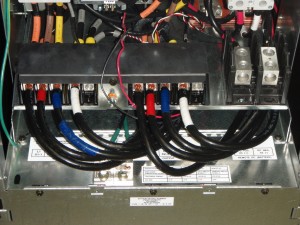
PA070005

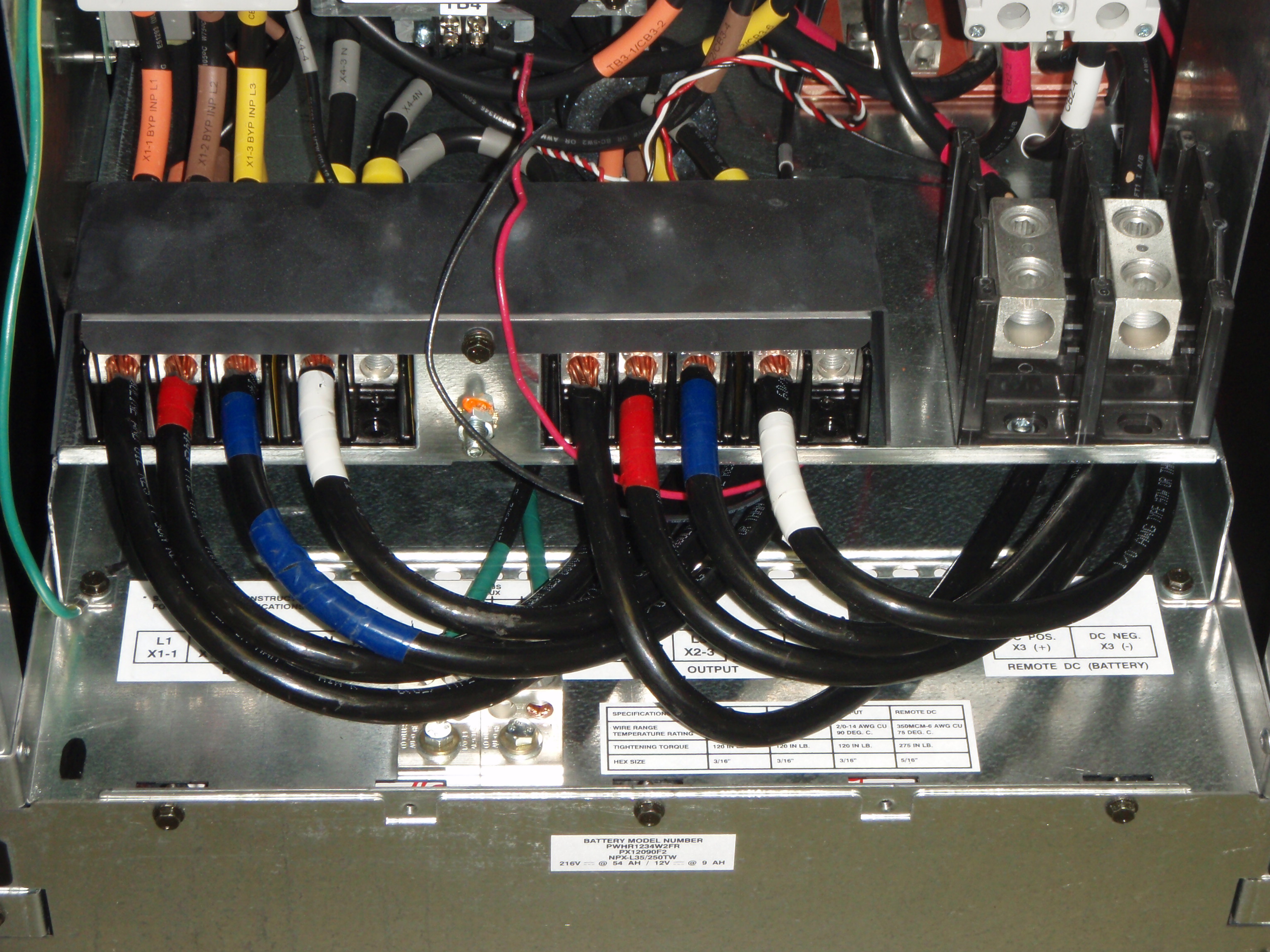
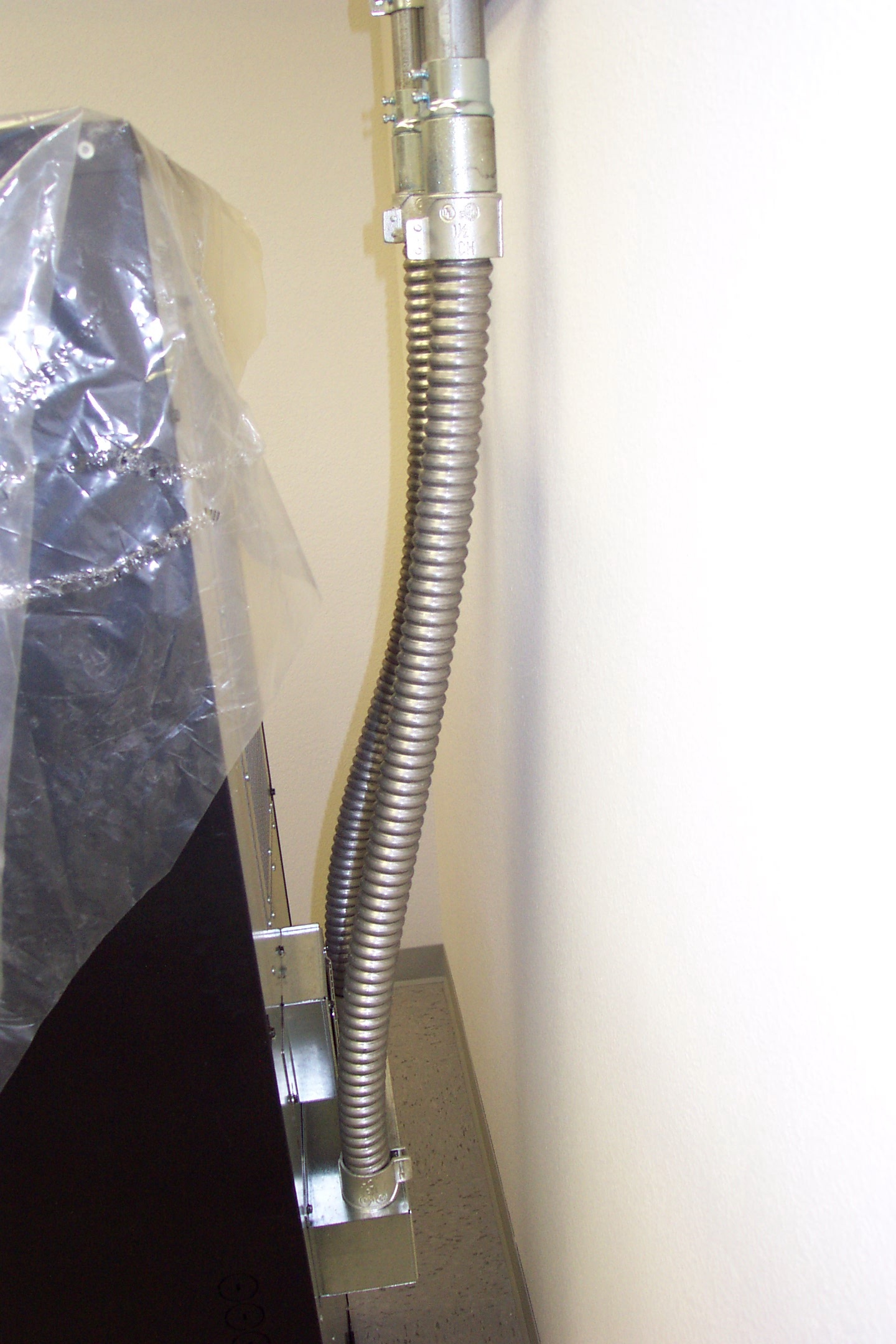
A close up of the UPS wiring. The cable is 1/0 AWG.
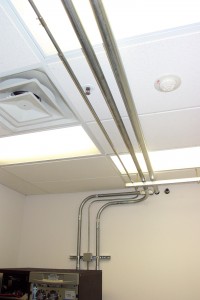
DCP_2605

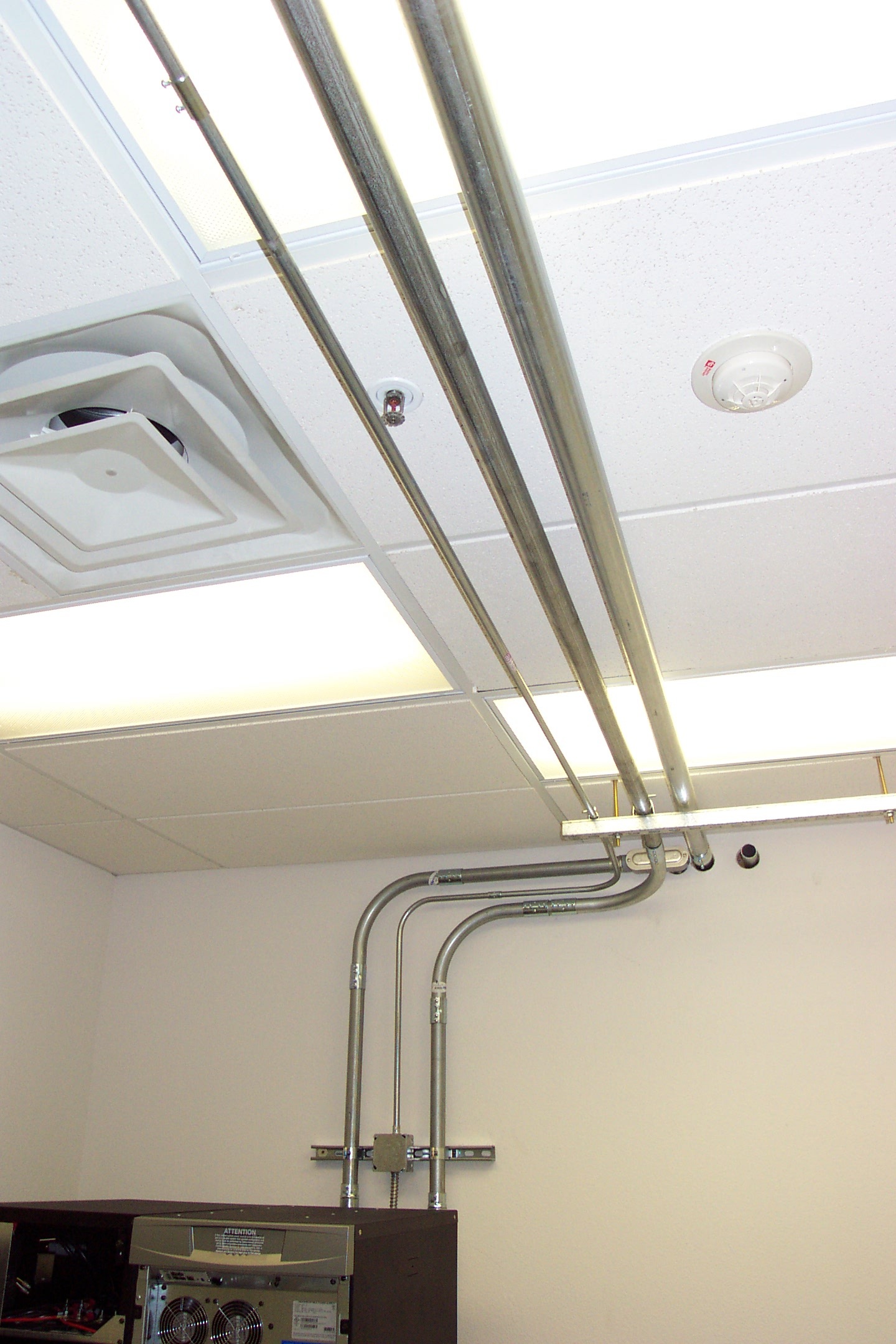
Some of the overhead piping in the UPS electrical room.
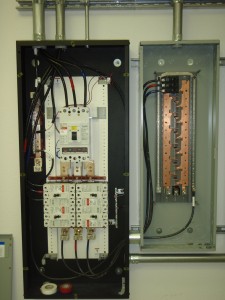
PA070006

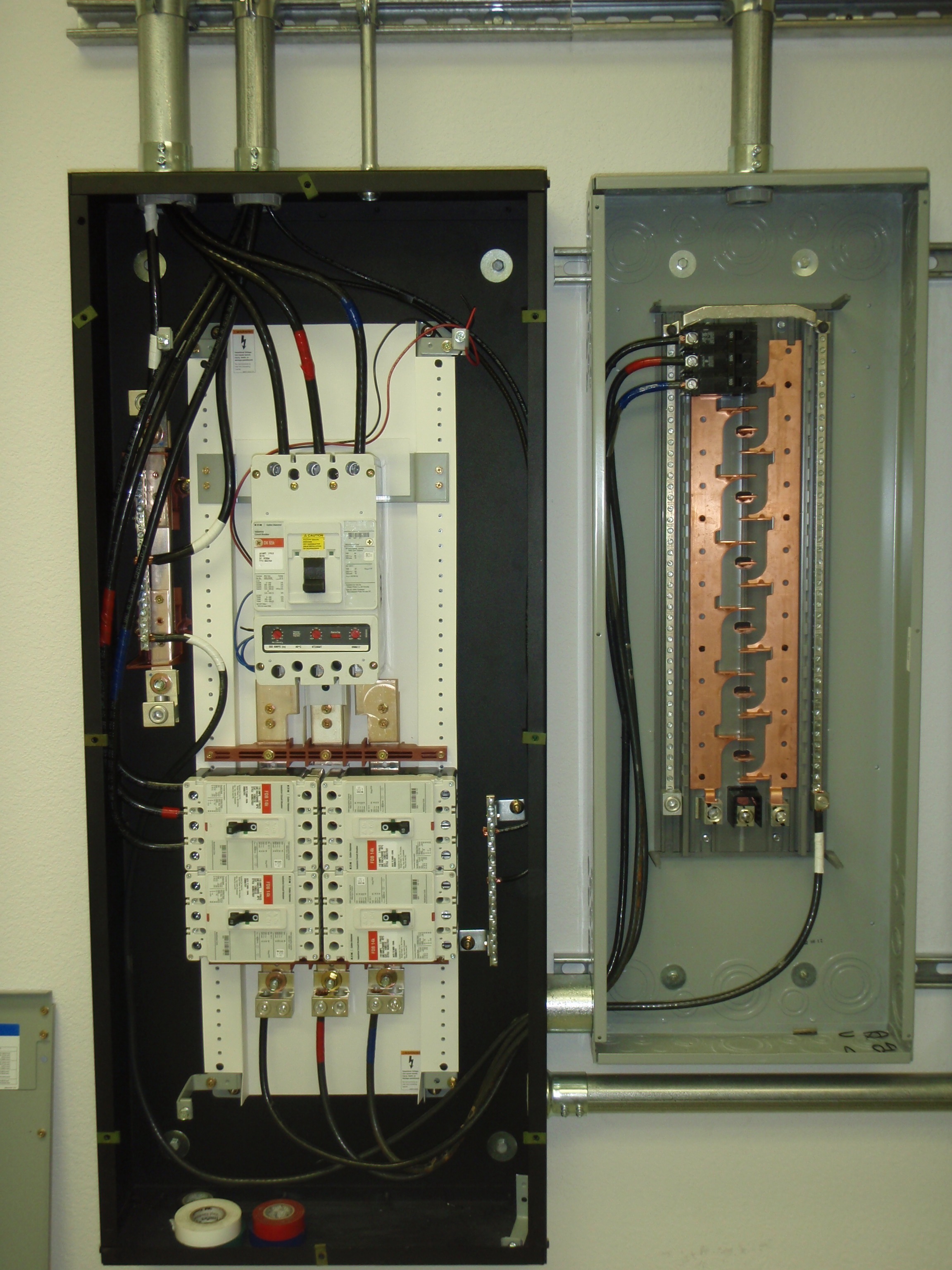
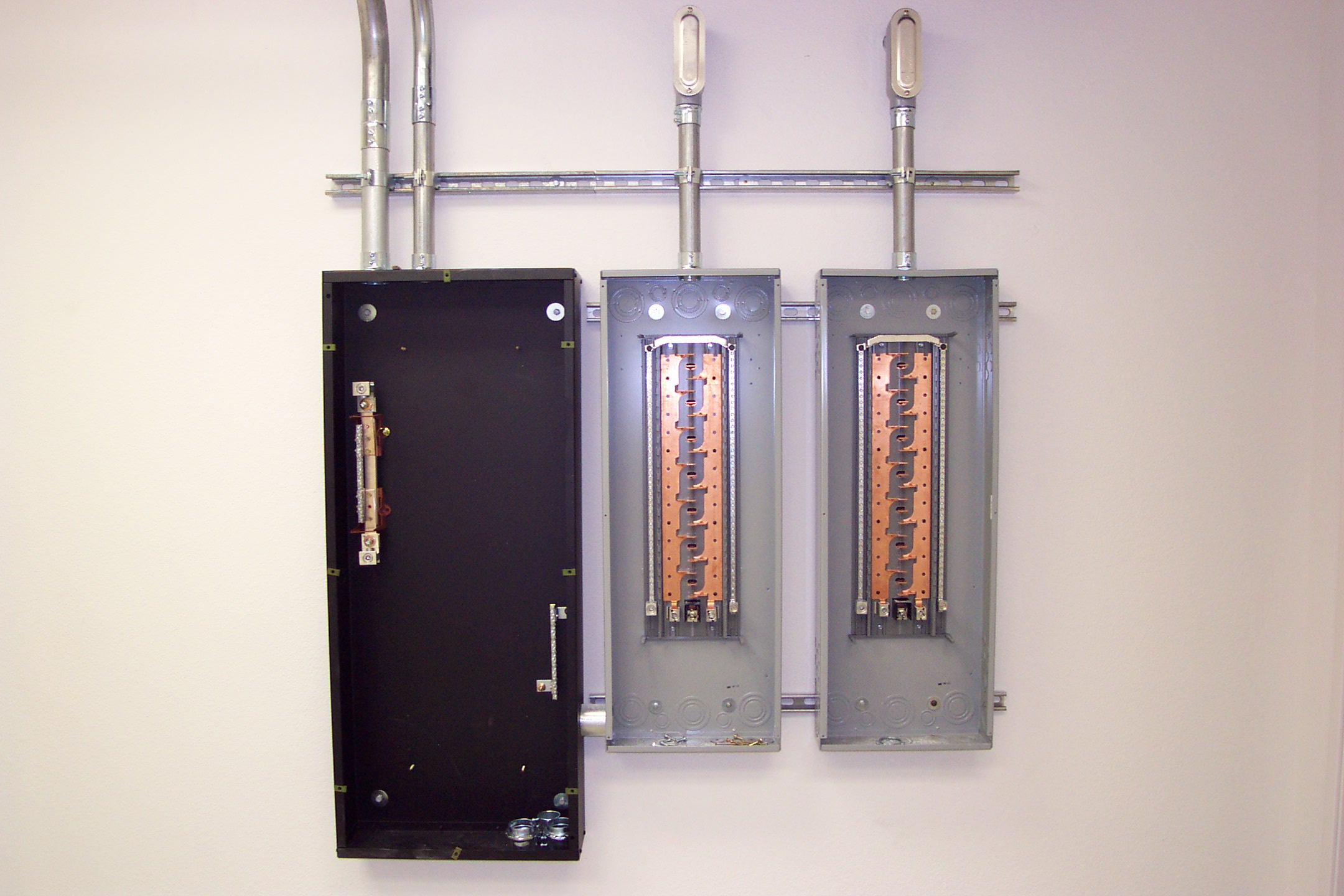
One of the two distribution panels for the server room (right) and the UPS paralleling panelboard (left).
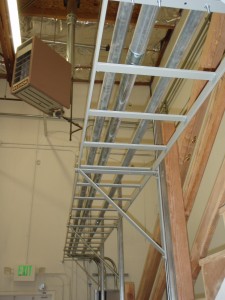
PA070001

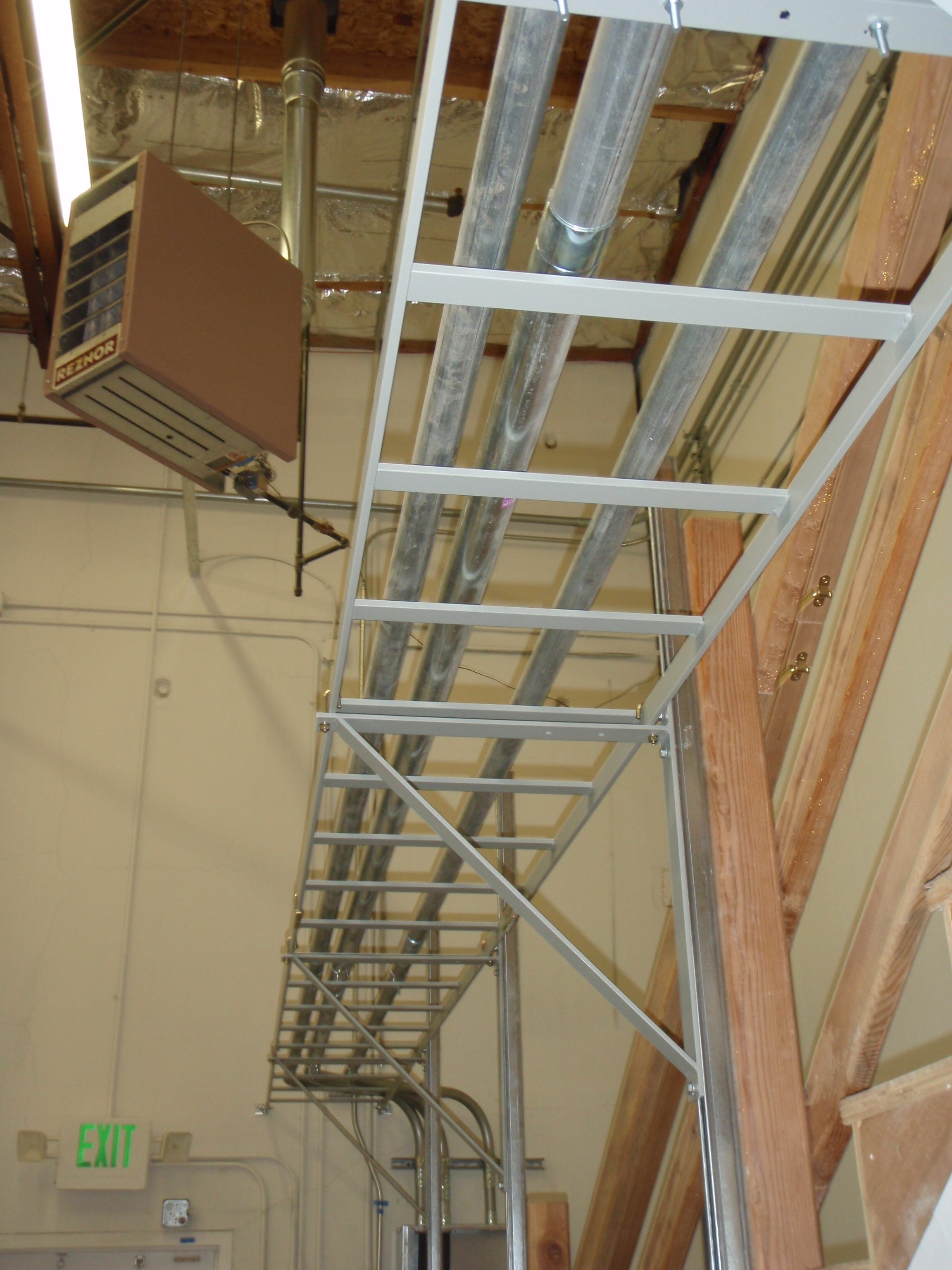
Overhead piping between the UPS electrical room to the panelboard that supports it. The panelboard is connected to our generator automatic transfer switch allowing it to be fed by utility power or generator power. As you can see, this is in the warehouse portion of the facility, which will house the generator.
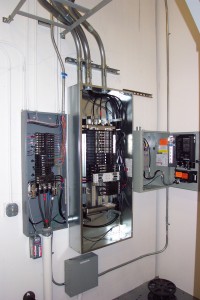
DCP_2600

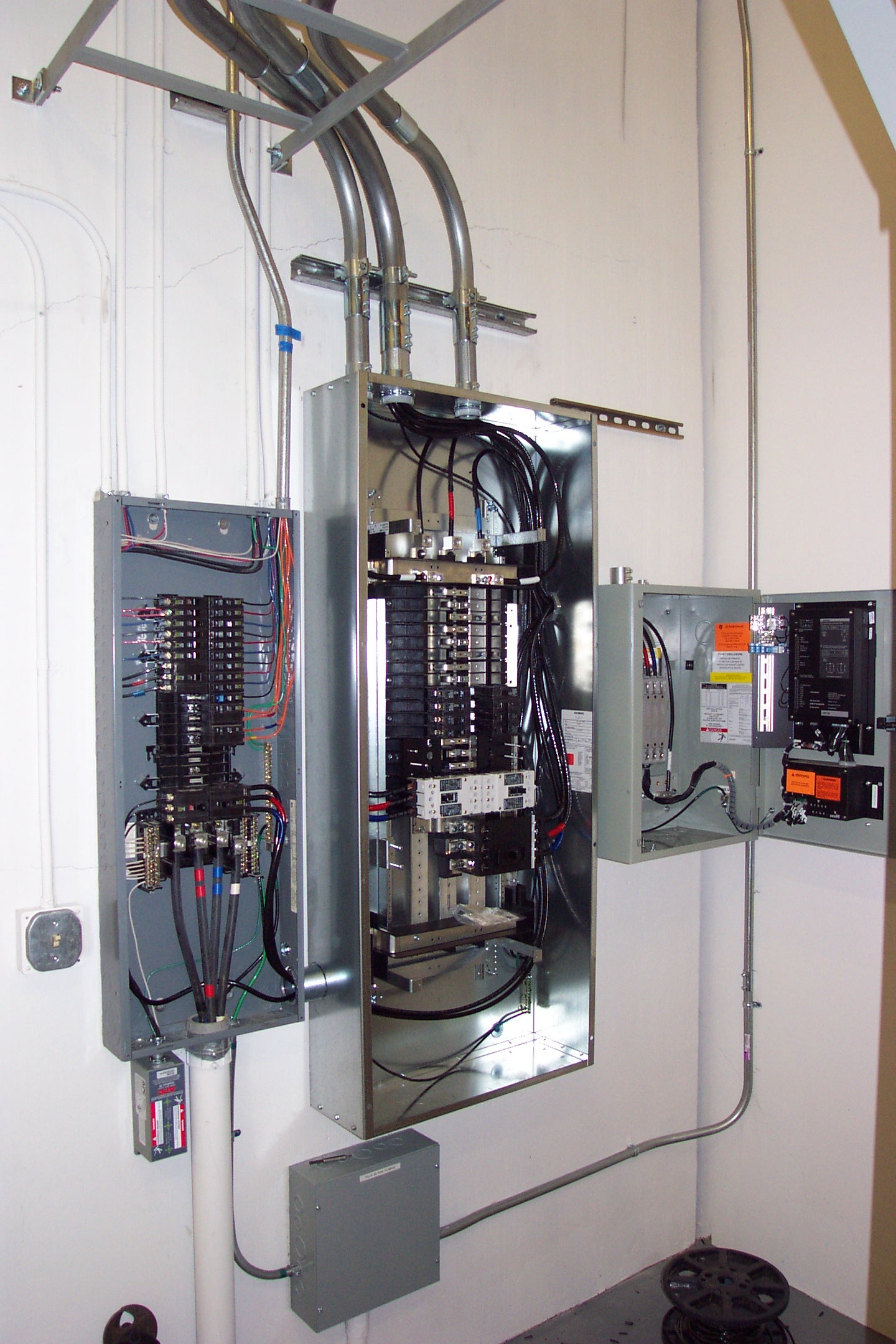
The original load center (left), the new panelboard for our stuff (middle), and our automatic generator transfer switch (right).
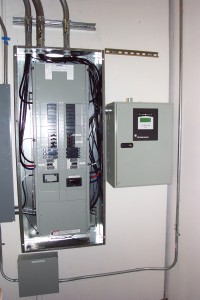
DCP_2608

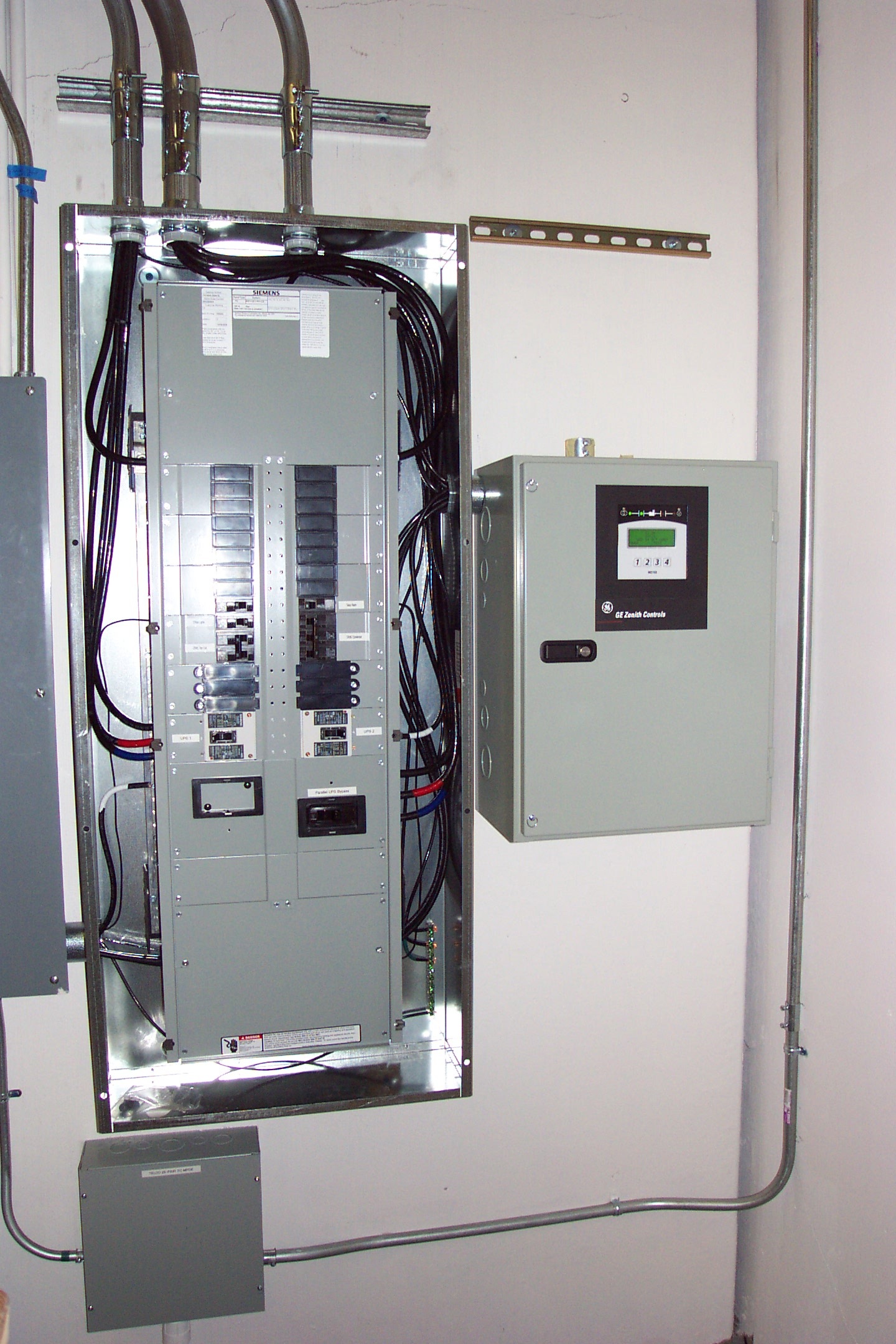
The panelboard with its dead front installed, wiring cleaned up, and the transfer switch after turning the power on for the first time. The generator will be installed within the week and piped to the connectors on top of the transfer switch. Wiring the generator is as simple as connecting it to the “emergency” contacts inside the transfer switch after the not so simple process of moving a very heavy diesel engine.

The next update will be after the major move of circuits and equipment this weekend. There’s still plenty for us to do before we can consider it done and take a break, so stay tuned!

Categories
Uncategorized

New Facility Progress #9

Today the distribution panels were mounted and the conduit attached to the UPS.

DCP_2580 DCP_2581

All of the conduit and panel installations are just about done, at which point we’ll be waiting for a custom 400A panelboard to arrive in order to finish it out and power everything up.

Categories
Uncategorized

New Facility Progress #8

We have a few pictures we’d like to share for this update. We’ve moved UPS #1 into position in the electrical room where it awaits its electrical connections.

DCP_2569 DCP_2571

As before, the blue tape on the floor marks equipment footprints and helps us position everything with appropriate clearances. The unit is heavy enough that it’s indented the composite tile floor where it’s sitting, however the slab underneath is 14″ fiber reinforced concrete intended for industrial loads, so we don’t have to worry about about equipment point loads in here or in the server room. It also makes an excellent mounting surface for concrete anchors.

DCP_2572

This is a view into the electrical room through the door. UPS #1 is immediately to the left, while units #2 and #3 will be placed in a clockwise manner (which you can see in the diagram taped to the far wall). The black box is the paralleling panel board with its internals laying on the floor. The breakers and bus bars were removed to prevent damage and drastically reduce weight (it’s 200 pounds fully assembled) for installation. The empty space to the right will contain two distribution panels to be installed on Monday.

Moving on to the server room, we’ve finished installation of the overhead wireways and started to temporarily place some racks and panels to get a feel for the installation. So far everything is lining up exactly as planned.

DCP_2573

These are the hinge-top wireways that will contain all of the electrical wiring in the server room. Rack outlets will be attached on the opposing side. You can also see the conduit through the ceiling that connects to the telco room upstairs. What’s that black thing bolted to the side of the lower ladder rack, you ask?

DCP_2577

This nifty piece of hardware is called a “patch rack”. It’s basically a 4U mini rack that we’re using to place permanently wired patch panels at strategic locations in the overhead space above the racks. We can do this because we operate a closed floor, escorted access only facility. This allows us to do little things like this to give our customers extra space to work with in their racks rather than taking it up with our equipment.

DCP_2574

And finally, it wouldn’t be much of a photo update without a picture of some racks. These are the four post enclosed cabinets we’re using as standard equipment. The two in this picture are in the planned position right on their blue tape markers and will eventually be leveled and bolted to the floor when the time comes. You can see the patch rack and hinge-top wireways in the overhead ladder racks.